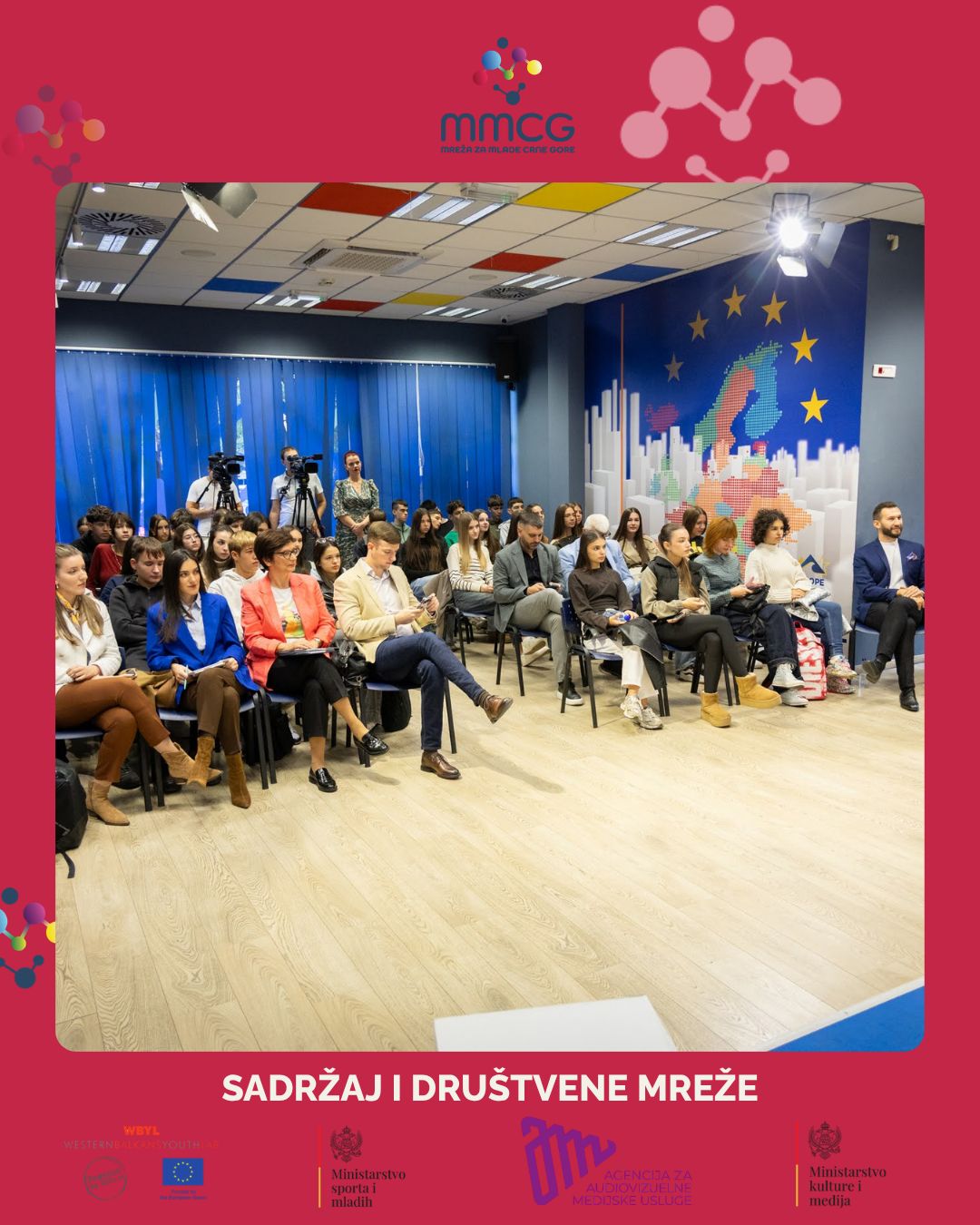
The final event of the current edition of the Western Balkans Youth Lab, dedicated to the topic "Content and social networks," was held on October 16 at the European House in Podgorica. The event brought together representatives of institutions, youth, and content creators with the aim of opening a dialogue on the impact of social networks on youth information and communication, the creation and consumption of digital content, media literacy, and the challenges of hate speech in the online space.
The program presented key findings of research conducted at the initiative of the Working Group for Disinformation and Media Literacy of Montenegro, formed within the Thematic Laboratory for Youth Policy in this area. The Working Group consists of representatives of youth organizations and Mreža za mlade Crne Gore, as the umbrella youth organization, as well as representatives of the Ministry of Sports and Youth, the Ministry of Culture and Media, and the Agency for Audiovisual Media Services. This composition enables cross-sector cooperation and exchange of perspectives among youth, institutions, and organizations active in the fields of youth policy, media, and media literacy.
The program began with opening remarks by Dominika Skubida, representative of the European Union Delegation to Montenegro, and Ognjen Marković from the Regional Cooperation Council (RCC). The research findings were presented by Dragana Vasiljević Vulević from the Ministry of Sports and Youth.
One of the important segments of the event was the signing of a Memorandum of Cooperation on the development of mechanisms to improve the representation and role of youth in the media, emphasizing the importance of cooperation among relevant actors in creating space for more active youth participation in the media environment.
The program also included a panel discussion "Content and social networks," during which the role of social networks in the daily lives of youth, the responsibility of content creators, the impact of digital platforms on information and public communication, as well as the importance of media literacy in recognizing disinformation and combating hate speech were discussed. Special focus was on the experiences and perspectives of youth actively participating in the digital space, as well as on opportunities to encourage more responsible and inclusive communication on the internet.
The final event was organized within the project Western Balkans Youth Lab, implemented by the Regional Cooperation Council (RCC) with financial support from the European Union.